
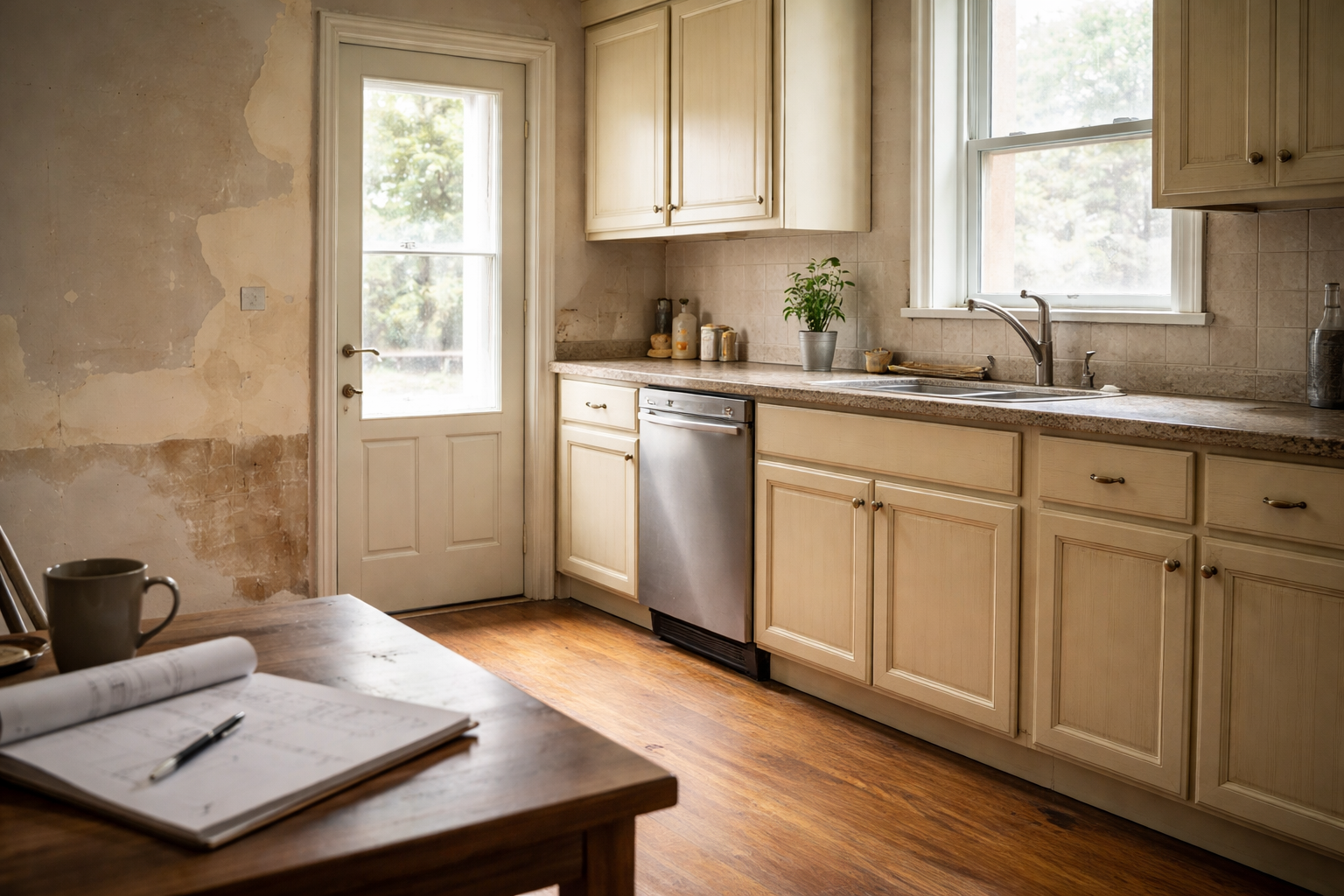
The problem is that homes don’t pause while decisions are deferred. Materials age. Systems strain. Small issues continue progressing beneath the surface.
What feels like “waiting one more year” often becomes the difference between a manageable renovation and a much larger, more expensive one.
Small Problems Rarely Stay Small
Many renovation needs begin quietly — a slow leak, aging plumbing, minor electrical limitations, or subtle floor movement. These issues don’t announce themselves loudly, but they also don’t resolve on their own.
According to the U.S. Environmental Protection Agency, moisture issues can escalate rapidly once materials remain damp, even when visible damage appears minimal.
Addressing an issue early often involves limited repair. Waiting allows damage to spread, increasing labor, materials, and scope.
Construction Costs Do Not Stand Still
Many homeowners assume postponing a renovation saves money. In reality, construction pricing tends to move in one direction over time.
Material costs fluctuate year to year, and labor costs generally rise as demand increases. Even when a home’s condition stays the same, the cost to renovate it often does not.
A project that fits comfortably within a budget this year may require compromises or scaling back next year simply due to market changes.
Deferred Maintenance Increases Disruption Later
When renovations are delayed, they often become more invasive. What could have been a focused upgrade may later require opening additional walls, replacing larger sections, or addressing multiple systems at once.
This doesn’t just increase cost — it increases disruption. Longer timelines, more noise, and extended periods without full use of key spaces become more likely.
Efficiency Loss Adds Up Month After Month
Aging interiors tend to lose efficiency gradually. Older lighting consumes more energy. Outdated ventilation struggles. Insulation settles. Fixtures wear.
The U.S. Department of Energy notes that targeted efficiency improvements can significantly reduce long-term utility costs.
Waiting doesn’t just delay improvement — it extends months or years of unnecessary operating expense.
Resale Value Is Influenced Long Before You Sell
Even homeowners with no immediate plans to sell are affected by delayed updates. Inspectors notice aging systems, deferred maintenance, and outdated interiors regardless of when a home hits the market.
Addressing renovations gradually preserves value and flexibility. Waiting often compresses decisions into a stressful timeline later.
Why Early Planning Usually Costs Less
Renovating sooner doesn’t mean doing everything at once. It means addressing the right things at the right time.
Early planning allows projects to be phased, budgets to be controlled, and work to be scheduled thoughtfully instead of reactively.
At EGM Construction, we help homeowners evaluate which issues deserve attention now, which can wait, and how to plan renovations without unnecessary pressure or overspending.
Moving Forward With Clarity
Waiting one more year can feel safer. But in many cases, it quietly increases cost, scope, and stress.
If you’re unsure whether delaying makes sense for your home, a conversation can bring clarity.
Visit our contact page to schedule a consultation and understand your options before costs grow further.