
Start With the Life That’s Actually Happening Now
Planning ahead shouldn’t mean ignoring the present.
If four people are competing for bathroom storage every morning, solving that problem matters. If the kitchen makes preparing dinner unnecessarily awkward, the household shouldn’t tolerate it for another decade because its needs might eventually change.
A useful renovation begins with honest observation. Where does the house create friction? Which spaces get used differently than originally intended? What does everyone routinely work around?
Those patterns reveal more about what a home needs than a collection of inspiration photos ever could.
Then Look Five or Ten Years Down the Road
Once today’s needs are understood, the horizon can widen.
Children grow. Work arrangements change. Parents may move in. Entertaining may become more or less important. Homeowners who once expected to move may decide they would rather stay where they are.
The Harvard Joint Center for Housing Studies researches how changing demographics and an aging housing stock continue to shape remodeling activity. Homes aren’t static because the people living inside them aren’t static either.
Thinking ahead doesn’t require predicting exactly what life will look like. It means avoiding decisions that unnecessarily lock the house into one very specific way of being used.
Flexibility Can Be More Valuable Than Extra Space
Sometimes the smartest future-minded renovation isn’t about making a room larger. It’s about making the room capable of doing more than one thing well.
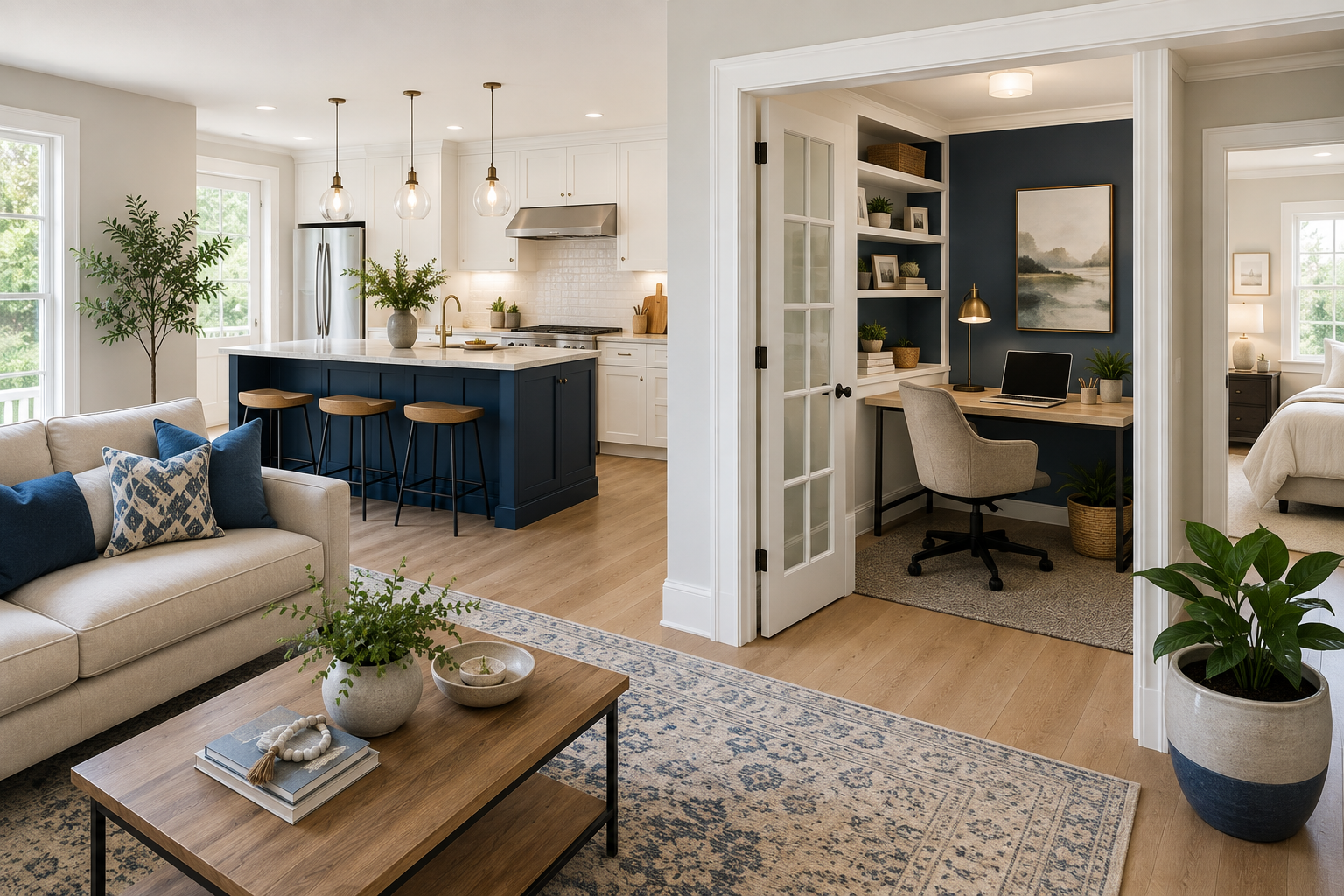
A guest room with thoughtful storage and adequate electrical access might also work comfortably as an office. A dining area can be designed to function for everyday meals without becoming useless when a larger group visits. Storage can be planned around adjustable shelving rather than one highly specific collection of belongings.
Flexibility gives a home room to change without requiring another renovation every time life changes with it.
Think Carefully Before Designing Around a Temporary Moment
Some needs feel permanent while we’re living through them.
A household with young children may want every room visible from the kitchen. Years later, those same family members may appreciate having a door they can close. A large dedicated office might seem essential during one stage of a career but become valuable bedroom or hobby space later.
This doesn’t mean avoiding personalized choices. A home should serve the people who own it. It simply helps to distinguish between a lasting preference and a temporary circumstance before making difficult-to-reverse structural decisions.
Consider How Long You Expect to Stay
A homeowner planning to move within a few years may approach a renovation differently from someone who expects this to be their home for another twenty.
For a shorter timeline, it may make sense to concentrate on overdue repairs, broadly useful improvements, and spaces that affect everyday enjoyment without rebuilding the house around highly personal preferences.
For a long-term home, the conversation can become more personal. It may be worth improving accessibility, reducing unnecessary level changes, creating easier storage, or making bathrooms and kitchens more comfortable to use over time.
The National Association of Realtors’ Remodeling Impact Report looks at remodeling from both financial and homeowner-satisfaction perspectives. That’s a useful distinction: a renovation can create value through the life it makes possible, not only through what a future buyer might pay for it.
Don’t Let Resale Value Design the Entire House
Resale matters, but it can become too loud a voice in renovation decisions.
Homeowners sometimes find themselves designing for an imaginary future buyer while they are the ones who will actually live with the choices for years.
There is value in avoiding decisions so unusual that they severely limit a home’s usefulness. But there is also little joy in spending money on a renovation designed entirely around somebody else’s preferences.
A reasonable middle ground is to make the home genuinely work for its current owners while preserving enough versatility that the spaces still make sense when circumstances change.
Some Future Planning Happens Behind the Walls
Not every forward-looking decision is visible when the project is finished.
Electrical capacity, outlet locations, plumbing access, ventilation, lighting controls, and the way walls are framed can influence how easily a home accommodates future changes.
When renovation already exposes these areas, it can be worth discussing what would be difficult or expensive to revisit later. Preparing thoughtfully during today’s work may leave tomorrow’s options open without requiring the homeowner to complete those future projects now.
A Renovation Doesn’t Need to Solve the Next Twenty Years
There is a point where future planning becomes overplanning.
A home doesn’t need to anticipate every possible career change, family arrangement, hobby, or lifestyle shift. Trying to do so can lead to compromises that don’t serve anyone particularly well.
The better goal is resilience: solve today’s real problems, recognize tomorrow’s likely ones, and avoid creating unnecessary obstacles between the two.
That’s a quieter approach to renovation, but often a more useful one.
Plan for Today Without Closing the Door on Tomorrow
At EGM Construction, renovation planning begins with understanding how a household actually uses its home and what it hopes the space will provide in the years ahead. The answer doesn’t have to be a larger or more complicated project. Sometimes it simply changes which decisions deserve the most thought.
You can learn more about our home remodeling services, or visit our contact page to talk through a renovation you’re considering.
A good renovation should make the home better for the life happening now. A thoughtful one leaves enough room for whatever comes next.